Sustainable Textiles
The fashion industry is estimated to be responsible for 10% of global carbon emissions – more than international flights and maritime shipping combined!
Our Sustainable Textiles programme consists of events and competitions to help better connect you to the clothes you wear and understand their impact on the planet.
Addressing textile waste generated by the fashion sector is crucial, given the alarming surge in clothing inundating our landfills. The proliferation of fast fashion has flooded markets with inexpensive trendy attire, resulting in overstuffed closets and yearly spring clearouts. While decluttering feels satisfying, opshops can’t accommodate the magnitude of clothes we donate, with a growing proportion being poor quality and ending up in landfill. So it’s essential to consider the fate of these garments and strategise ways to prevent the issue from arising in the initial stages. Join us as we explore these issues and provide solutions on a personal level with our Sustainable Textiles programme.
The Community Loom Project

Weave a thread, add a row, and become part of a living tapestry shaped by everyone who visits – a piece that grows a little more with each pair of hands.
Our newest sustainable textiles project is a large, custom built wooden frame weaving loom that travels to events across the region, inviting people of all ages and abilities to weave strips of repurposed t-shirts into a joint piece of art.
Anyone can take a turn, whether they have five minutes or an hour. Every contribution becomes part of the finished piece, which doubles as a functional rug once complete.
Weaving is one of the oldest human crafts, practised across cultures for thousands of years as a way of making useful, beautiful things by hand. It’s also increasingly recognised for its social and wellbeing benefits. Working alongside others on a shared, repetitive, tactile task gives people a natural reason to slow down and chat with people they might not otherwise meet. For many, community craft projects like this one are as much about the connection made along the way as the finished piece.
The loom was designed and built by Te Ara Dirkse, our Sustainable Textiles Project Coordinator. “I wanted something people could actually get their hands on,” says Te Ara. “We all know textile waste is a massive problem, and it feels like we can’t do much ourselves to shift the needle. This is a nice way to make something positive together and make use of a precious textile resource. You can see the piece grow as more people add to it, and it’s a lovely way for people to connect with each other while they’re doing something good for the planet.”
New Zealand sends an estimated 180,000 tonnes of clothing and textile waste to landfill every year, or around 34kg per person. The Community Loom Project offers a small but visible way to help shift that, one t-shirt at a time, while giving people something enjoyable to take part in.
See it in action
The Community Loom Project will make its first public outing at the Climate Canvas finalist exhibition(opens in new tab), part of the Climate Action Festival(opens in new tab), 17 to 20 September at The Cargo Shed, Tauranga.
Re:Stitched Runway Upcycled Fashion Comp

What is Re:Stitched Runway?
Re:Stitched Runway challenges participants to transform clothing destined for landfill into runway-ready outfits, showcasing creativity, sustainability, and circular fashion. Each designer receives a selection of second-hand garments and a challenge garment to incorporate into their final look. Over one month, they create a fully wearable outfit that is judged on:
- Wearability
- Construction
- Creativity
- Sustainability
The Fashion Show
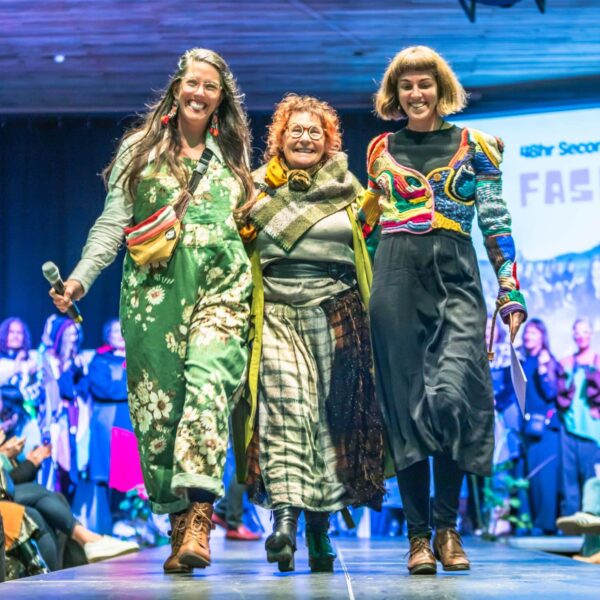
The participants then send their outfit down the runway for judging, during an evening of sustainable fashion and fun. This show celebrates upcycled, repurposed, and pre-loved clothing to spotlight sustainable alternatives to fast fashion.
Competition Information Pack 2026
For anyone curious to learn more about the competition, you can download the information pack below for full details on how the Re:Stitched Runway Competition works.
Competition Information Pack
Take a look back at previous year’s Re:Stitched Runway
2026 was another great year with 55 excited entrants creating garments for the runway. We had some returning designers and some new faces too, all vying for the chance to wear the Re:Stitched Runway crown. The evening was filled with creativity and inspiration, showcasing what’s possible when we rethink waste. The challenge garment was a branded flag and banner that we saved from landfill and all our contestants had to incorporate it into their outfits!
Check out the photos of the winners below, or click here to see the full album folder of photos on facebook.
2026 Winners:
Open Category
- First place: 35: Tegan Hignett
- Runner up: 12: Jana Heller
- People’s Choice: 35: Tegan Hignett


High School Category
- First place: 11: Zoe Wallis
- Runner up: 1: Breanna Gray
- People’s Choice: 15: Vanessa Yeh, Sophia Lang


2025 Winners:
Open Category
- First place: Rhonda Hewlett
- Runner up: Glen Maclachlan


High School Category
- First place: Zoe Wallis – Katikati College
- Runner up: Quentin Dubois – French Online School

2024 Winners:
Open Category
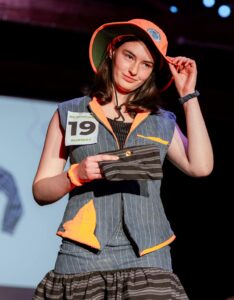
- First place ($250): Celeste Moffatt
- Runner up ($100): Rhonda Hewlett


High school Category
- First place ($250): Ana Capes – Mount Maunganui College
- Runner up ($100): Zoe Wallis – Katikati College


Sustainable Textiles Series – 2026

From June through July, our Sustainable Textiles programme ran six workshops covering Korean patchwork art, zero waste tee-making, garment upcycling, community textile art, and a Matariki star garland, all before the big fashion show on 25 July.
Bojagi Patchwork Art with Make & Mend
Sun 14 June – $40pp
SOLD OUT!
Click to Book Bojagi(opens in new tab)
Zero Waste Oversized Tee with Emroce
Fri 19 June – $20pp
Discover the art of zero-waste fashion and learn how to make your own oversized T-shirt from scratch.
In this hands-on workshop with Emroce designer Emma La Rocca, you’ll explore simple zero-waste pattern-making techniques to design your own oversized tee. This innovative method uses the entire piece of fabric, meaning little to no textile waste. Rather than working from conventional patterns that often leave fabric offcuts behind, this approach respects the creation and use of the fabric in its entirety.
Click to Book Zero Waste(opens in new tab)
Thrift Flip/With a Twist! with Sew Love
Wed 24 June – $50pp
Come join us for a special evening of creativity and sewing… We’re thrift flipping but with a twist.
What’s the twist? Instead of going out to find something in the op-shop to transform into something new, we are encouraging you to shop the back of your wardrobe instead. YES you have your very own thrift store right under your nose.
Click to Book Thrift Flip(opens in new tab)
Community Textile Art Workshop 1 with LILIA CASS
Sat 4 July – $10 pp
Join textile artist Lilia Cass for a unique collaborative textile art project exploring the creative potential of reclaimed bridal silk. Using off-cuts collected from the Lilia Cass studio, participants will learn a range of fabric manipulation and textile art techniques while creating an individual artwork that will become part of a larger collaborative installation.
Workshop One – Gathered Forms & Machine Manipulation
Click to Book Textile Art 1(opens in new tab)
Fri 10 July – $30pp
In this 2-hour workshop, we’ll celebrate the spirit of Matariki, the Māori New Year, through craft, by creating a set of nine stars using upcycled fabric scraps.
This is a relaxed, hands-on workshop, perfect for both adults OR children (ages 10 and up), offering a gentle way to connect with the season through making.
All sewing machines and materials provided, as well as morning tea snacks and coffee.
Community Textile Art Workshop 2 with LILIA CASS
Sat 18 July
Join textile artist Lilia Cass for a unique collaborative textile art project exploring the creative potential of reclaimed bridal silk. Using off-cuts collected from the Lilia Cass studio, participants will learn a range of fabric manipulation and textile art techniques while creating an individual artwork that will become part of a larger collaborative installation.
Workshop Two – Hand-Stitched Surfaces & Assembly